
Lift Off

This is the seventh article in a series I call ApartmentJet: The Story of a Startup, chronicling my most recent startup success.
The month before launch was madness.
Our dependence on unsupported APIs began its assault on our progress and sanity. Airbnb, a fairly new technology company at the time, made API changes daily. We'd get no warning. Our integration would break, and we'd rush to implement a fix. These fixes could take minutes or hours. Occasionally they would take days.
To make matters more complex, some of Airbnb's changes were only tests. Our tools would break, we'd implement a fix, the test would end, and we'd need to roll back our fix, thereby spending hours or days of development time only to arrive back where we started.
Nevertheless, May 8th, 2017 arrived, and we were ready.
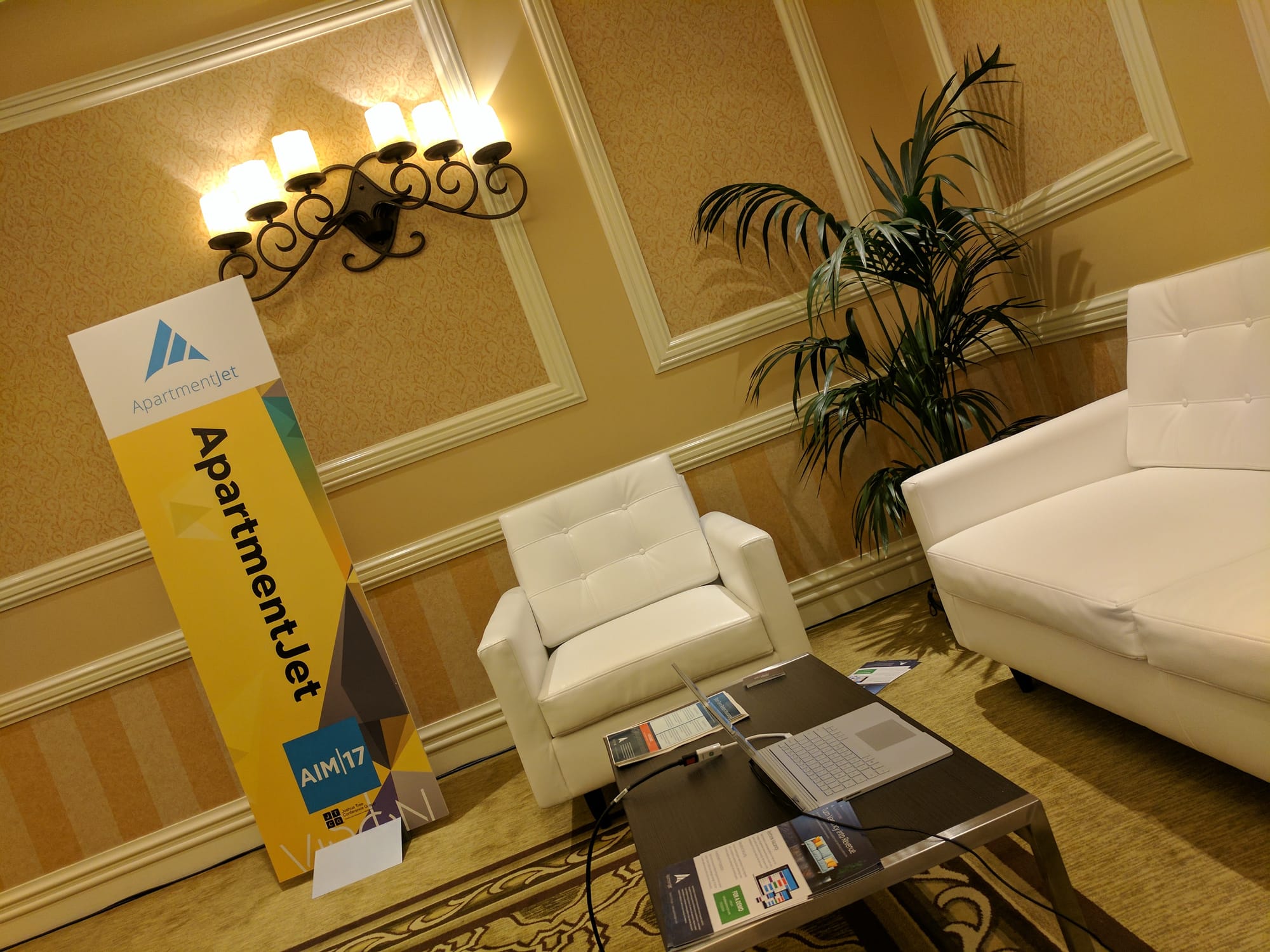
We rented a large booth at the Apartment Internet Marketing conference in Huntington Beach, California. We gave demos to hundreds of people. Many were property managers at some of the country's largest multifamily operators.
Overwhelmingly, people were intrigued by our solution. They knew Airbnb and short term rentals were a real issue that had to be addressed. Few of them were sure which path to take. We signed up a handful of customers on the spot and others within weeks.
Our two biggest early discoveries: Content and Taxes.
The descriptions and photos and all the details that make up a short term rental listing greatly impacted reservations. These days, that's pretty obvious, but it took us a minute back then to find the data and make the connection. Andy and Carly started hiring local photographers to take professional photos, and eventually we built a listing setup fee into our onboarding process, because properties couldn't always be trusted to make the effort, thereby hurting our numbers as much as their own.
Tax collection also proved a bigger issue than expected. Airbnb did not collect local taxes at the time, but property owners didn't want to get in trouble with local governments that might assess fines or strip licenses. To develop our solution, we were required to register with local jurisdictions, calculate taxes based on complex rate charts for various filing authorities, and submit taxes on the properties' behalf.
This was a huge undertaking. Short term rental taxes and regulations were undergoing massive restructuring across the country due largely to the disruption Airbnb had introduced to local housing markets. Keeping track of all the rates and rules during a period of heightened volatility proved nearly impossible. We eventually found a vendor to make the process easier, but we still had to be licensed.
It almost killed us. We inevitably made some mistakes, but we delivered a lot of taxes to a lot of jurisdictions. It was revenue they weren't getting from Airbnb. We felt we made a positive contribution to help short term rentals remain viable and to demonstrate value to local communities. Of course, years after we sold the company, Andy still gets filing notices and late fee summons from a handful of taxing authorities. He doesn't love it.
Despite those initial concerns, we were riding high at launch. Interest was high. Our product needed more features before it would find true market fit, but it worked. Couple with the extrahuman might of Andy and Carly, it delivered bookings and revenue.

Pre-launch is often an idealized time when you're free to solve problems without the burdens of customer expectation or satisfaction. Post launch is a different beast entirely, and bad news was on the way.
Soon our relationship with our first investor would fall apart. Airbnb would shut us down. We'd have no money, no product, and a terrifying path ahead. As they say, if it was easy, someone else would've already done it.
All that and more in Part 2.
Next: Coming Soon
Previous: Countdown to Launch